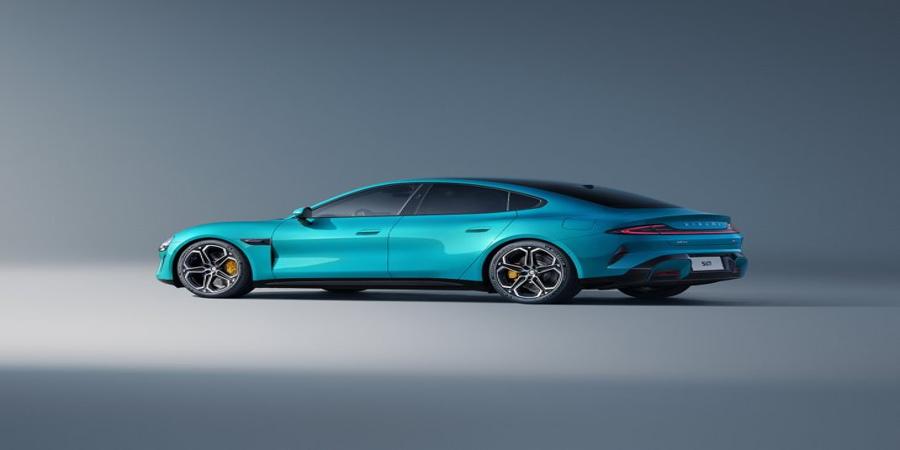
Chinese smartphone giant Xiaomi has revealed its first electric car, a sharp-looking sedan called the SU7.
Slated to roll out in China next year, it’s another entry into an increasingly crowded market for EVs. It’s also another attempt in this software-obsessed world to match up the technology people find in their phones to what goes on inside their car.
Xiaomi might have a shot. That’s because the car will run Xiaomi’s “HyperOS,” a new architecture the company has been working on for more than six years that’s supposed to be dynamic enough to power everything including phones, smart home systems and cars. The goal is a more seamless experience, one where your apps and preferences are ready to go no matter where you are.
This is not a new idea by any stretch. It’s the same pitch Faraday Future’s founder originally gave many years ago when promoting his original electric vehicle project in China, a part of his tech conglomerate at the time.
That effort failed, but there have been many different attempts in the years since to get closer to a world where in-car software resembles the phones in our pockets. There are quite literal versions of this in Apple’s CarPlay and Google’s Android Auto, which mirror a phone’s software on the in-car screen. Google has also developed a version of Android that can power a car’s entire infotainment system and has partnered with a number of automakers. Apple is doing something similar, though it is much further behind and only just announced its first two customers last week.
Efforts to take everything in-house, though, tend to get complicated. Apple has spent years working on its own car project, but has repeatedly pivoted and shifted focus. Volkswagen tried to build up its own powerhouse in-car software team but has struggled mightily. Tesla has developed a robust in-car software experience for its vehicles, though it has resisted CarPlay and Android Auto in favor of maintaining control of its screens.
Xiaomi stands apart, then. Thanks to the proliferation of a dominant electric vehicle supply chain in China, plus the rapid advancement (and sinking costs) of electric vehicle technology, it’s now possible for deep-pocketed companies like Xiaomi to attempt something like building a car that is ready-made for its software. It’s not exactly alone, as Huawei is also backing its own EV startup in China. But Xiaomi is the most fully integrated effort to date.
As for the specs, they look impressive on paper. The company is claiming as much range on a full charge as 800 km, or just shy of 500 miles, though that’s on China’s rosy test cycle. That is on the higher-end model, which is built atop a 101kWh battery pack from Chinese giant CATL. A base model with just 73.6kWh of capacity will allegedly get closer to 668 km, or 415 miles, on a charge. They will charge fast (220 km in five minutes) and will be fast (0-100 km/h in just 2.78 seconds). Pricing will come at a later date.
Despite all this, Xiaomi’s biggest challenge will be the same that faces any new vehicle-maker: It’s an incredibly difficult task to design and build cars at scale that are reliable and safe, regardless of the underlying technology. With that in mind, making the in-car experience more seamless feels like a layup.
Source @TechCrunch