Meet Vianova, a French startup that is building a data platform for shared mobility companies as well as local governments. The company acts as both a data repository and a data visualization dashboard.
It has raised a $6.4 million (€6 million) Series A funding round led by Baloise VC with XAnge as well as existing investors RATP Capital Innovation and Ponooc also participating.
Many cities have changed drastically with the rise of free-floating bikes, electric scooters, moped scooters and cars that you can unlock with your phone. Cities have also changed their rules over time and embracing micromobility in different ways.
The good news is that these mobility fleets all have some form of connectivity with a GPS chip and a cellular modem. In other words, companies and local governments can use data to make those services more efficient and safer for people using them and everyone else living in these cities.
Right now, Vianova tracks one million connected vehicles on its platform. Some companies use the platform to manage their fleet and make sure the vehicles are in the right spots at the right time.
Policymakers and data scientists can also leverage this platform to discover some trends. It can be used to improve infrastructure, create slow-speed zones or parking areas through geofencing and more.
All of this can be done through a SimCity-like dashboard with map overlays and real-time data. The idea is that you can use Vianova as real-time dashboard and as an analytics tool to generate historical reports and see how well you’re doing — whether you are a mobility company or a local government.
But an analytics tool without any data would be a bit useless. That’s why you can combine your own data with different mobility data sources. This can be particularly interesting for cities that want to access data from private companies to better understand what’s happening.
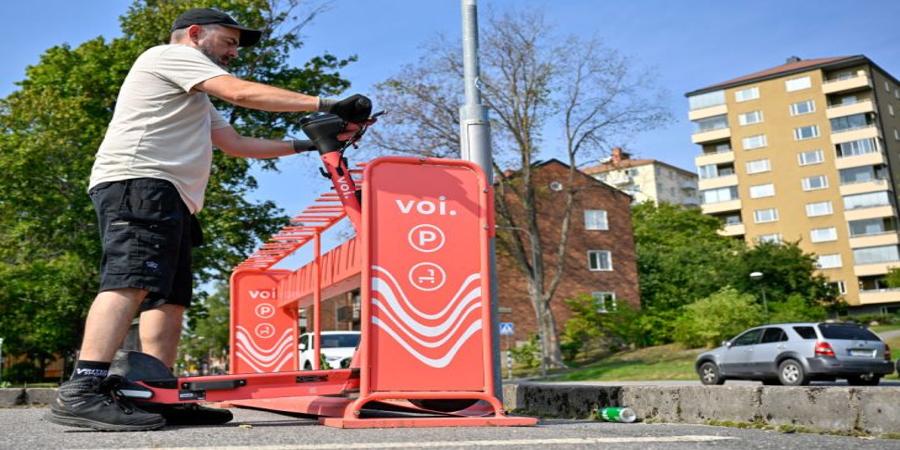
For instance, the city of Stockholm and Voi both use Vianova to improve shared mobility services in the city. Mobility companies decide who they want to share their data with.
Vianova uses APIs to fetch data from mobility operators so that you see live data on the platform. Data can be aggregated and anonymized.
Some of Vianova’s customers include the cities of Zurich, Amsterdam, Stockholm and Marseille, as well as mobility operators like Bolt and Voi. Some big infrastructure companies are also using the platform, such as RATP, Aéroports de Paris and KTH University.
Source @TechCrunch