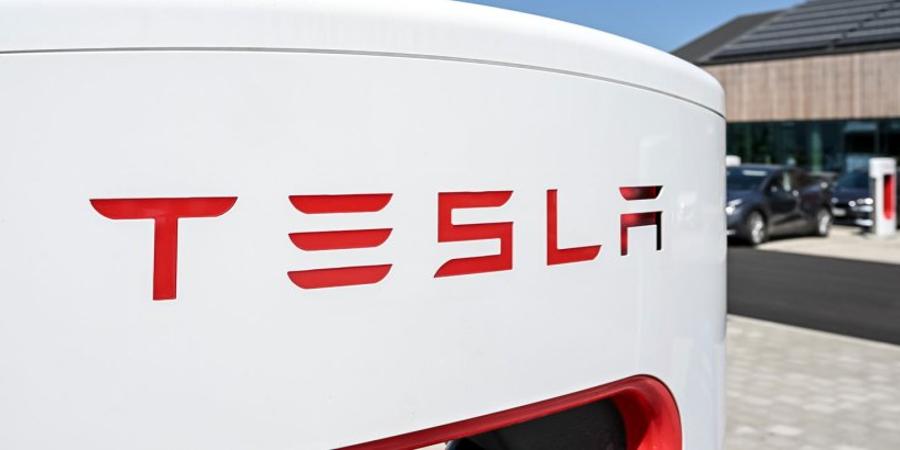
In a victory for Tesla, a California federal judge ruled over the weekend that a group of Tesla owners cannot pursue in court claims that the company falsely advertised its automated features. Instead, they will have to face individual arbitration.
U.S. District Judge Haywood Gilliam’s ruling isn’t a win for the defensibility of Tesla’s advanced driver assistance systems, Autopilot and Full Self-Driving (FSD), but simply for Tesla’s terms and conditions. The plaintiffs who filed the proposed class action in September 2022 did in fact agree to arbitrate any legal claims against the company when they signed on the dotted line, according to the judge. They had 30 days to opt out, and none chose to do so.
Forced arbitration has been a stalwart partner in the tech industry. Tesla’s success in dodging a class action lawsuit could encourage other automakers to lean more heavily on this tactic.
“In some respects, it probably does put down a marker that these types of claims will likely face these types of challenges,” Ryan Koppelman, partner at law firm Alston & Bird, told TechCrunch.
Koppelman noted that arbitration is a common legal strategy used by companies to avoid individual claims and class actions like this one.
In this specific case, a fifth plaintiff did opt out of arbitration, but Judge Gilliam ruled to dismiss their claims, as they waited too long to sue, according to court documents.
“The statue of limitation aspect is interesting because the claims at issue here had to do with what the Tesla products will be capable of in the future, as well as what they were supposedly capable of at the time of sale,” said Koppelman.
The plaintiffs in the case all claimed to have spent thousands of dollars on unreliable and dangerous technology that has caused accidents, some resulting in death. Tesla has denied wrongdoing and moved to send the claims to arbitration, after citing the plaintiffs’ acceptance of the arbitration agreement.
Judge Gilliam also denied the plaintiffs’ motion for preliminary injunction “prohibiting the defendant from continuing to engage in its allegedly illegal and deceptive practices.” In effect, the plaintiffs asked the court to force Tesla to stop marketing their ADAS as providing “full self-driving capability”; to stop selling and de-activate their FSD beta software; and to alert all customers that Tesla’s use of terms like “full self-driving capability,” “self-driving” and “autonomous” to describe the ADAS technology was inaccurate.
The original complaint, filed in September 2022, alleged that Tesla and its CEO Elon Musk have been deceitfully advertising its automated driving features as either fully functioning or close to being “solved” since 2016, despite knowing full well that the capabilities of Autopilot and FSD don’t live up to the hype.
The plaintiffs alleged that Tesla’s ADAS cause vehicles to run red lights, miss turns and veer into traffic, all the while costing Tesla owners thousands of dollars.
Briggs Matsko, the named plaintiff in the lawsuit, said he paid $5,000 for his 2018 Tesla Model X to get Enhanced Autopilot. Tesla’s FSD costs an additional $12,000.
The failed class action isn’t the only time Tesla’s so-called self-driving technology has come under scrutiny. Earlier this year, Musk was found to have overseen a 2016 video that overstated the capabilities of Autopilot.
The revelation came from a deposition from a senior engineer taken as evidence in a lawsuit against Tesla for a fatal 2018 crash involving former Apple engineer Walter Huang. The lawsuit alleges that errors by Autopilot, and Huang’s misplaced trust in the capabilities of the system, caused the crash.
Tesla’s ADAS is also being investigated by numerous state agencies. California’s Department of Motor Vehicles also accused Tesla in July 2022 of falsely advertising its Autopilot and FSD systems. The National Highway Traffic and Safety Administration (NHTSA) is actively probing 830,000 Teslas that include Autopilot. And the Department of Justice has requested information from Tesla regarding its Autopilot and FSD technology.
Source @TechCrunch