NASA is pushing back the next two Artemis missions to the moon — including the first crewed lunar mission in more than 50 years — by around 12 months in order to give commercial partners more time to develop their technology.
Artemis II is now scheduled for no earlier than September 2025 and Artemis III, the mission that will send humans to the lunar south pole, is now scheduled for September 2026. The date of the fourth Artemis mission remains unchanged (September 2028).
The Artemis program involves a complicated architecture that includes critical contributions from major commercial partners, including SpaceX, Blue Origin and aerospace primes Lockheed Martin, Northrop Grumman and Boeing.
The plans look roughly like this: For Artemis II, NASA will use its massive Space Launch System rocket (the same rocket that launched just over a year ago for Artemis I) and its Orion capsule to send a crew of four on a 10-day journey through space. That includes three Americans and one Canadian.
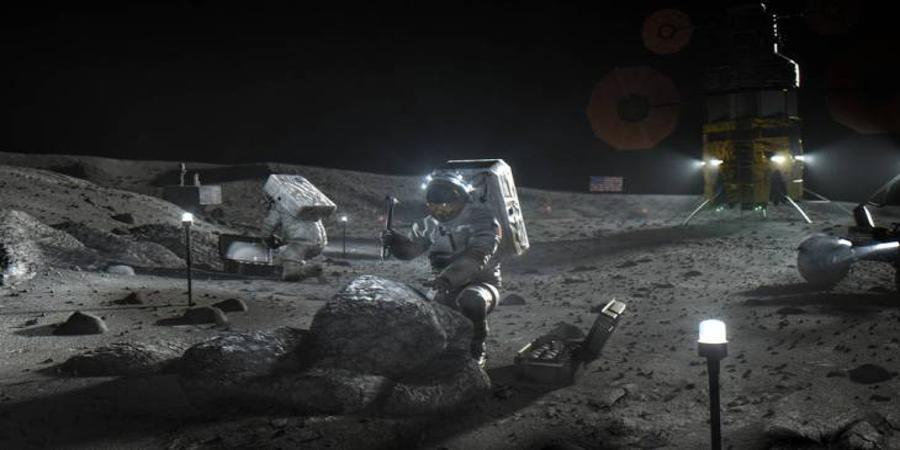
Artemis III is substantially more complex. While two astronauts will launch on SLS and travel in Orion as in the prior mission, the capsule must then dock with an orbiting SpaceX Starship to bring them to the surface. In 2021, the agency selected SpaceX under a $2.9 billion contract to develop that, called the Human Landing System, but it isn’t as simple as it might sound. That’s because SpaceX must also develop in-orbit refueling capabilities, as the architecture involves Starship refueling in space before picking up the astronauts.
After delivering astronauts to the moon, the Starship HLS must then launch from the surface before docking with Orion. It will take an incredible number of Starships, each with propellant transfer capabilities — around 10 tankers, SpaceX senior engineer Jessica Jensen said during the press conference.
Each of these pieces on its own — SLS, Orion, the Starship Human Landing System and in-orbit refueling — is a gargantuan, historic task; in concert, it’s nothing less than unprecedented.
Adding to the complications is the fact that Artemis III will need new spacesuits; NASA selected Axiom Space in 2022 to deliver those suits at a contract value of $228.5 million.
It’s not just the commercial companies that need more time, of course. NASA officials also outlined a handful of issues they discovered after the demonstration launch of SLS in late 2022. That includes issues with Orion’s heat shield, the life support system and the abort system.
NASA’s associate administrator summed it up nicely during a Tuesday press release, calling for “a realistic plan” when considering the incredible technical challenges ahead.
“We’re looking at our Starship progress and need for propellant transfer, the need for numerous landings, we’re looking at our spacesuits that we’re acquiring in a different manner than we’ve done before, and developing the new spacesuits as well,” he said. “It’s an incredibly large challenge and a really big deal.”
Agency administrators further emphasized that safety is the top priority, and no doubt crewed missions come with a host of additional challenges and significantly higher stakes than uncrewed missions. Indeed, during the press conference NASA deputy associate administrator Amit Kshatriya admitted that even the new dates for the program were aggressive given the technical work ahead.
Source @TechCrunch