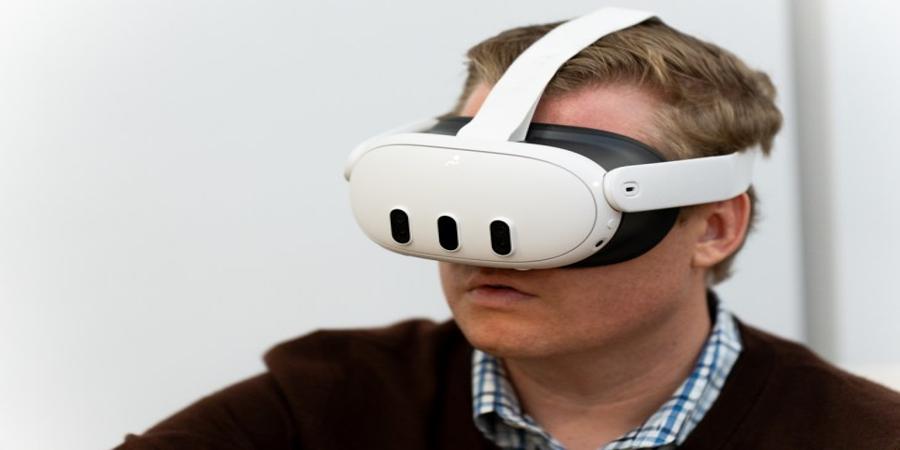
Immersion, a company specializing in haptic feedback tech, has settled a lawsuit with Meta over the latter’s use of touch-feedback in its Quest VR headsets.
In a press release, Immersion said that it had signed a license with Meta to make Immersion’s patents available to Meta and its affiliates’ hardware, software, VR and gaming products. The terms of the deal weren’t disclosed.
“We’re delighted to grant Meta a license to our patents for haptic technologies,” Immersion president and CEO Eric Singer said in a canned statement. “We’re excited to license Meta for their delivery of high-quality haptics in their devices.”
Based in Aventura, Florida and founded in 1993, Immersion’s first major customer was Microsoft, with whom the startup worked to integrate its haptic feedback and touch technology into Microsoft’s DirectX APIs. After acquiring a haptic patent portfolio from Cybernet Systems, a small tech firm, in 1999, Immersion listed publicly on the Nasdaq.
In the years since its IPO, Immersion has gained a reputation as a patent troll, using targeted mergers to acquire the rights to more than a thousand haptic feedback patents. As of 2014, Immersion had over 1,650 issued or pending patents in the haptic field in the U.S. and other countries — a number which dropped to around 1,200 to 1,300 by the end of June 2022.
Some of Immersion’s patents are of dubious legitimacy, as a 2018 post on the Electronic Frontier Foundation blog spotlights. One, “Interactive virtual reality performance theater entertainment system,” covers minor tweaks to existing VR systems like having players watch prerecorded videos — even though these tweaks weren’t new at the patent application’s filing.
Immersion filed a suit against Microsoft and Sony in 2002, alleging that their game console controllers were infringing on two of its patents. Both defendants eventually reached agreements with Immersion that involved multimillion-dollar payments; Sony was forced to pay $150 million, while Microsoft opted to buy 10% of Immersion’s stock and a perpetual license.
It’s long been rumored that Sony’s loss led the company to release the PlayStation 3 version of its DualShock controller without rumble.
In 2016, Immersion claimed that Apple infringed two patents on the iPhone 6s and Apple Watch. And in May 2023, Immersion sued Valve for alleged infringement relating to the use of vibration in the company’s Steam Deck and Valve Index VR headset.
Interestingly, as a recent post from Seeking Alpha’s Gary Bourgeault points out, Immersion’s business model isn’t especially profitable — or sustainable in the long run. The company has remained in the $30 million to $36 million revenue range for a number of years, with significant overhead from its litigation against companies with enormous legal departments and deep pockets.
“On the litigation side, [Immersion] can get temporary boosts to its share price because of the millions of dollars it’s awarded,” Bourgeault writes. “[B]ut as mentioned earlier, there aren’t a lot of big companies to move the needle if it decides to litigate to defend its patents … The point is, while there’s a very predictable stream from fixed fees, licensing and royalties, those streams of revenue dry up once the patents run off.”
Source @TechCrunch