German launch startup Isar Aerospace has scored $165 million (€155 million) in new funding as it races toward the inaugural flight of its Spectrum small rocket later this year.
The company, founded in 2018, is one of a handful of European startups looking to fill the gap in the launch market on that continent. There are just two European rockets flying today: the heavy-lift Ariane 5, built by ArianeGroup, and Italian aerospace company Avio’s Vega launch vehicle.
But Isar CEO Daniel Metzler told TechCrunch that European governments are waking up to the geopolitical and economic upsides to sovereign launch capabilities.
“If you take a look at the European Union, even Germany itself, there’s a strong focus on the automotive industry. [The space industry] is a huge opportunity at the same time to build up another economical pillar that can be extremely profitable,” he said.
Isar’s funding history reflects this increasing overlap between public and private interest. This most recent Series C round was led by investors including 7-Industries Holding, Bayern Kapital, Earlybird Venture Capital, HV Capital, Lakestar, Lombard Odier Investment Managers, Porsche SE, UVC Partners, and Vsquared Ventures. Part of these funds are backed by the EU and programs managed by the European Investment Fund; last year, Isar also won a $11.3 million (€10 million) prize from the European Commission.
Isar is taking a long-term approach, Metzler said. This thinking is built into the company’s decision to be fully vertically integrated, its automated, mass-manufacturing technique, and the design of the launch vehicles. The company is betting that some investments – in the vertical integration, for example – will eventually have a huge pay off, even if that pay off is not realized for the first five or even ten vehicles.
“I believe that you can be much cheaper if you’re actually fully vertically integrated, if you know how to do it,” Metzler said. “I think one of the big drivers already for us early on was scalability. We wanted to not just build one or two vehicles a year but tens of vehicles per year. In that case, especially with more and more units per year, it really starts paying off if you actually do it yourself.”
Isar Aerospace co-founders Daniel Metzler and Josef Fleischmann. Source: Isar Aerospace
Isar Aerospace co-founders Daniel Metzler and Josef Fleischmann. Source: Isar Aerospace
Full vertical integration has had other benefits too, like being able to simplify the vehicle’s design and generating more of a buffer against ongoing supply chain issues facing other space companies, he added.
The company will be flying five customer payloads on its first mission, which is scheduled for the second half of this year from Andøya, Norway. Isar signed an agreement with the space port, Andøya Space, for exclusive use of one of its launch pads for up to twenty years.
Isar has also inked firm contracts with a number of customers for future launchers. Those customers span smaller startups, like OroraTech, a German space-based wildfire detection developer, and French electric propulsion startup Exotrail, as well as big corporates like Airbus Defence and Space. Isar’s first American customer is rideshare broker Spaceflight Inc., for a dedicated mission in 2026.
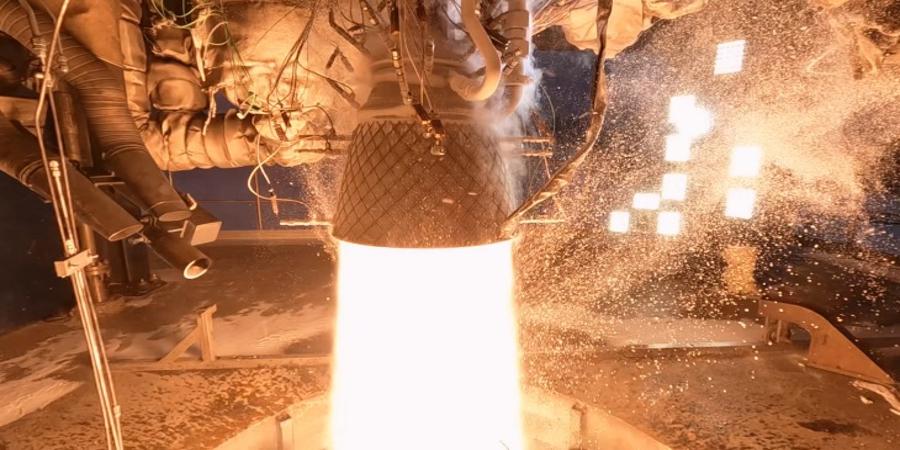
The company has more work to do before the first launch – the next big milestone is integrated stage testing – but Metzler said he’s feeling positive about the progress. The company recent revealed on Twitter that it had run 124 hot fire tests of its Aquila rocket engine over a one year period, an encouraging sign that the rocket is coming together.
Isar is not the only European startup looking to take a slice of the burgeoning European launch market. The company is competing against fellow upstarts Rocket Factory Augsburg in Germany, as well as Orbex and Skyrora in the United Kingdom, and a handful of others.
Metzler’s hunch is that the competition will be steep.
Looking even five or ten years down the line, there may only be around eight major launch players spread across the world, he said. “Probably you’re going to have three to four players in the U.S., maybe two players or so within Europe, maybe another two within Asia. That would be my guess.”
“It’s not that many,” he added. “But look, if you divide the entire market globally for launch services by seven, eight companies, it’s a very lucrative business for those seven, eight companies.”
Source @TechCrunch