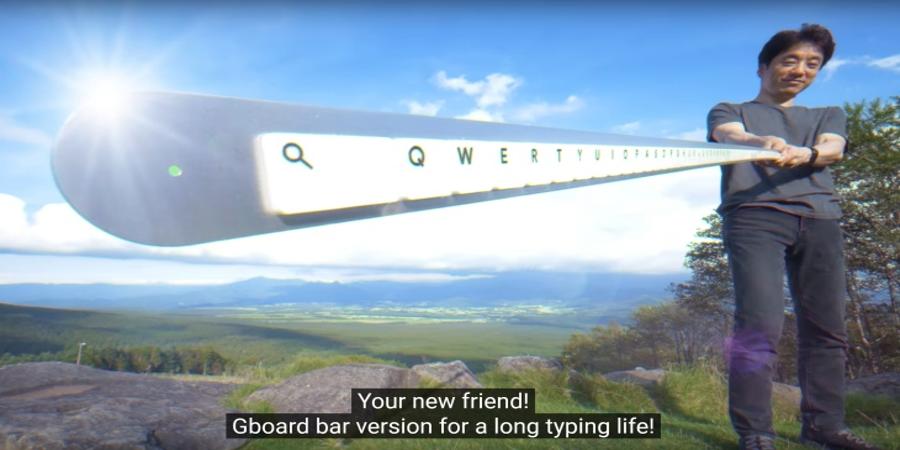
The TechCrunch newsroom fears only one thing: the coming of April 1. Because, I’m just going to say it, the tech industry isn’t very funny. But Google Japan’s ongoing series of ridiculous keyboards, where they completely commit to the joke, suggests we may have found the first known exception.
The latest is the “Gboard Bar Version,” (or stick version depending on the translation), a keyboard about 1.6 meters feet long (down from 2.4 meters in the prototype) with all the letters and numbers arranged from left to right in a “one-dimensional QWERTY layout.” There are options for ABC, ASCII codes and katakana.
No longer will you have to hunt and peck for individual keys, the creators explain. “With this keyboard, it is very convenient to know immediately that the 16th letter from the left is G.” So simple!
It also has ergonomic advantages:
“When you use this keyboard, your arms will naturally spread out, so you can stretch your arms secretly even at work. When you press the rightmost and leftmost keys at the same time, you may stretch your legs unintentionally,” the team writes.
Of course it also doubles as a reaching implement for hitting far away light switches, and triples as a walking stick for when you need to touch grass. Watch the video below for many more little light-hearted and genuinely chuckle-worthy uses and benefits:
It was posted on September 1, I think because it has 101 keys. The joke not appearing on the traditional day for such things makes it all the funnier.
But this isn’t the first “new input proposal from the Gboard team.” The posts have been going on for 10 years now, starting with a Morse Code input method and getting rather more involved from there. Some are more successful than others, but even if the spoon-bending one is a bit much, the origin video is still amazing. I love send-ups of self-serious product journeys, and this is no exception:
The Tegaki “physical handwriting” keyboard, essentially a real-world version of the swiping used on the actual Gboard and others, is close enough to reality that you might just think it’s an actual product. In fact I feel sure I’ve seen something like this before, as a way of controlling the cursor.
Some of the designs are genuinely interesting and remarkable little pieces of engineering, like this tilting-key keyboard:
And this integrated teacup item is delightfully absurd:
In case you’re wondering how you use it (translated by Google from the Japanese): “The kanji for fish are arranged in the syllabary on the 50 keys. Instead of [an] alphabet, it uses a sushi arrangement of horse mackerel, sardine, eel, ei, and okoze, and characters are input by fish-kanji conversion.” Very finny.
But the team clearly had fun with it, and amazingly they’ve actually built these designs — you can find the code and blueprints here.
This is certifiably ancient news for our Japanese readers, but I hadn’t seen it get any play over here in the States. And I figure the opposite end of the year from April Fool’s is the best time to highlight this delightful bit of work by a team that seems to be funny and dedicated in equal measure.
Source @TechCrunch