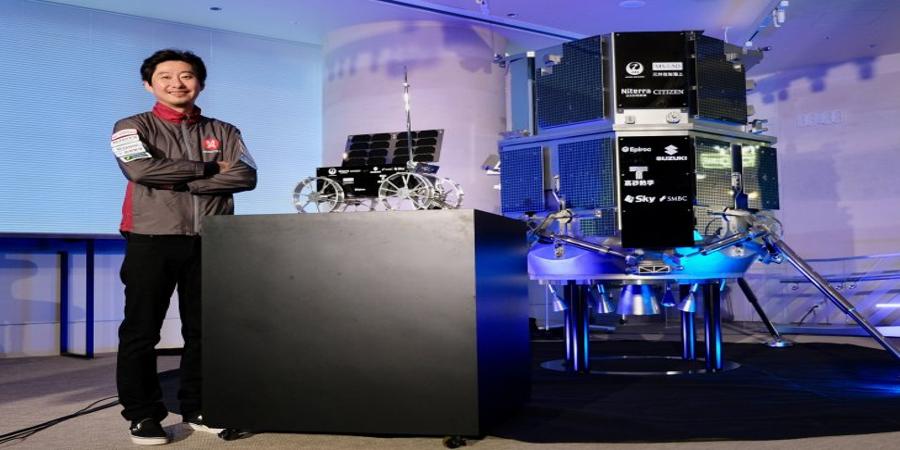
Japanese lunar technology company ispace will make its second attempt at putting a lander on the moon in the fourth quarter of 2024, just about two years after it launched its first failed mission, executives said Thursday.
ispace launched its first lunar lander mission on a SpaceX Falcon 9 in December 2022. The lander, called Hakuto-R, spent over 100 days journeying to the moon. Success seemed imminent — until an issue with the altimeter malfunctioned, causing the lander’s software to misjudge the distance to the surface. Ultimately, the lander ran out of fuel and crashed into the moon’s surface just moments before it was supposed to make contact.
Despite the setback, ispace is clearly not cowed: The company is calling their second lander “Resilience,” a name that CEO Takeshi Hakamada said in a press conference is meant to represent “being strong and being able to bounce back, the quality of moving straight forward without defeat.”
Although the first mission ended in catastrophe, the company was nevertheless able to glean plenty of information about subsystem performance, hardware, communications and orbital maneuvering. In some ways, having something go wrong just moments before landing is the best-case among all possible worst-case scenarios: It means that absolutely everything else went right.
For that reason, the second lander will have much of the same hardware as the first, ispace’s deputy EVP of engineering Yoshitsugu Hitachi said. Like the first lander, Resilience stands at 2.5 by 2.3 meters and weighs 340 kilograms without fuel. The second mission will also take the same route to the moon via what’s called a “low-energy transfer orbit,” which takes months to complete.
“The analysis of the Mission 1 landing failure clearly identified the causes and areas of improvement, so the main focus of Mission 2 will be on reviewing and improving the verification process that has already been implemented,” Hitachi said. “We are confident in the successful landing of the Resilience lander on Mission 2 and believe we can safely execute soft landing and begin subsequent operations on the moon.”
The biggest difference between Mission 1 and Mission 2 will be the payload: for Mission 2, ispace has developed a very small lunar rover that will explore the landing site and collect samples of regolith as part of a NASA contract. The rover was designed to be “as small as possible, as light as possible,” ispace Europe’s managing director Julien Lamamy said. The rover, which weighs only five kilograms, has its own cameras, communications equipment and a 1 kilogram payload capacity. In addition to the rover, the Resilience lander will carry four commercial payloads.
ispace said it expects to complete lander assembly by spring 2024, then commence environmental testing, which typically takes a few months. From there, the lander will head to Florida for its launch on a Falcon 9 rocket.
No doubt ispace will continue to gather useful data from these missions. The company, which is headquartered in Tokyo and maintains offices in Luxembourg and Denver, is also working on a third mission, currently scheduled for 2026.
Source @TechCrunch