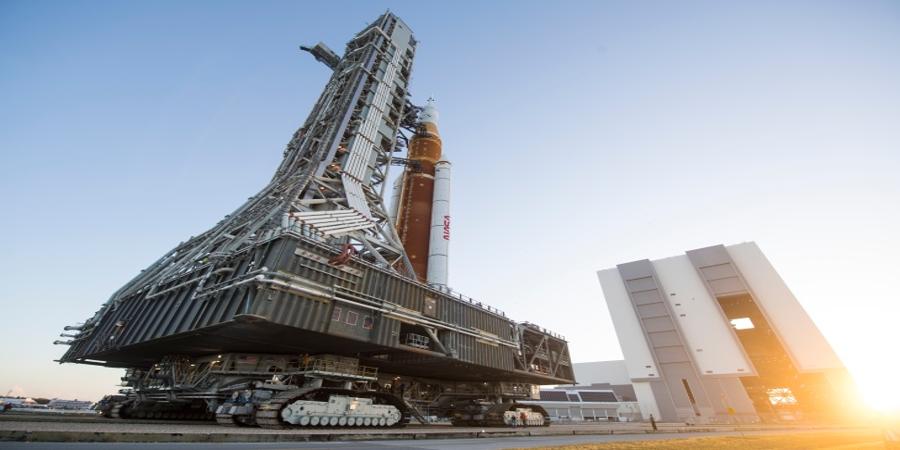
Congress will pour billions more dollars into the Space Launch System (SLS) rocket and its associated architecture, even as NASA science missions remain vulnerable to cuts.
Both the House and Senate Appropriations Committees recommend earmarking around $25 billion for NASA for the next fiscal year (FY 24), which is in line with the amount of funding the agency received this year (FY 23). However, both branches of Congress recommend increasing the portion of that funding that would go toward the Artemis program and its transportation cornerstones, SLS and the Orion crew capsule.
Those programs would receive $7.9 billion per the House bill or $7.74 billion per the Senate bill, an increase of about $440 million from FY 2023 levels.
Meanwhile, science missions are looking at cuts of around that same amount, with the House recommending a budget of $7.38 billion versus $7.79 billion in FY 2023.
The increase in funding is just the latest sign that Congress is not backing down from the mission architecture of the Artemis program, which aims to return humans to the moon by 2025. That plan is dependent on having a heavy-lift rocket capable of giving enough boost to deliver a fully fueled and crewed capsule to lunar orbit. For this task, Congress devised SLS and Orion, programs built on legacy NASA and (ostensibly) cost-saving for that reason.
But this decision has been met with an enormous amount of criticism, principally for the incredible price tag of both programs — price tags that will keep rising as the program continues to develop. For example, overall costs for SLS have tipped past $24 billion since the project was first conceived in 2010. But because the rocket is not reusable, despite it having a successful first flight last November, Congress will have to spend many more billions for each subsequent mission.
That’s not to mention the costs of Orion or the mobile launch tower from which SLS takes flight.
In May, NASA’s Office of Inspector General issued a devastating audit of the program, which found that delays to the SLS booster and engine contracts have resulted in an approximately $6 billion cost-overrun. The report further criticizes the use of cost-plus contracts, a fee structure by which essentially all of the risk is taken on by the government.
Overall, NASA received $25.4 billion in funding for FY ’23, with $2.6 billion earmarked toward SLS, $1.34 billion to Orion, and $1.48 to the Human Landing System contract programs. Science programs — which include the Mars Sample Return mission and Earth science missions — received $7.8 billion overall.
Source @TechCrunch