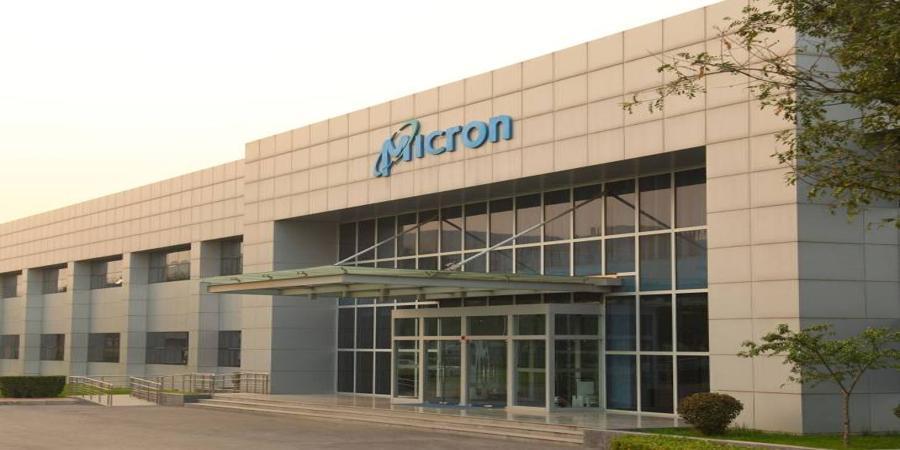
China has banned some sales of Micron products after launching a probe into the American memory chip giant for cybersecurity risks in early April.
The decision is widely seen as part of the tic-for-tac in the ongoing U.S.-China economic competition, which has started to upend a deeply intertwined global tech supply chain.
Last year, the U.S. added China state-backed memory chip maker Yangtze Memory Technologies Corporation to the entity list, barring U.S. companies from supplying it without approval. The U.S. has also restricted Nvidia from exporting H100, its state-of-the-art GPU for generative AI training, to China.
The Cyberspace Administration of China on Sunday told domestic firms that provide “key information infrastructure” to stop buying from Micron. Products of Micron “have serious cybersecurity issues and pose a big risk to the country’s key information supply chains, raising cybersecurity concerns.”
Micron, which opened its first factory in China 16 years ago, specializes in producing computer memory and data storage such as dynamic random-access memory, known as DRAM, and flash memory. China is its third-largest market, accounting for 10.7% of its annual revenue in 2022. We’ve reached out to Micron for comment.
“Key information infrastructure”, as China defines it, includes telecommunication, energy, transportation, finance, defense and any other area that concerns national interests.
The authority did not specify in what ways Micron poses a cybersecurity risk, but it did cite China’s Cybersecurity Law that took effect in 2016, a wide-ranging regulation aimed at strengthening the government’s oversight on the internet, with rules like real-name verification and storing local user data on local servers.
Micron anticipated its challenges in China in its 2022 annual report.
In particular, we face the threat of increasing competition as a result of significant investment in the semiconductor industry by the Chinese government and various state-owned or affiliated entities, such as Yangtze Memory Technologies Co., Ltd. (“YMTC”) and ChangXin Memory Technologies, Inc. (“CXMT”), that is intended to advance China’s stated national policy objectives. In addition, the Chinese government may restrict us from participating in the China market or may prevent us from competing effectively with Chinese companies.
The ban could benefit Micron’s competitors in China, the South Korean giants Samsung Electronics and SK Hynix. But the U.S. also urged South Korea not to fill China’s market gap in memory chips if Micron gets banned, according to the Financial Times.
In response to the ban, the U.S. Department of Commerce said it will “engage directly with Chinese authorities to detail the U.S. position and will engage with key allies and partners to address what it termed as distortions of the memory-chip market caused by China’s actions.”
In recent years, China has been working to shore up its technological self-reliance in key industries like advanced semiconductors, which have historically depended on foreign suppliers. For example, there’s been a push to substitute foreign hardware and software with domestic alternatives across state-owned enterprises.
Source @TechCrunch