Bird, the shared micromobility company that was delisted from the New York Stock Exchange last week, is issuing another round of layoffs, according to an email interim CEO Michael Washinushi sent to the company. TechCrunch has viewed the email.
TechCrunch has been unable to confirm the number of people affected by the layoffs. Bird has yet to respond to our questions for clarification, but we will update this story once they do.
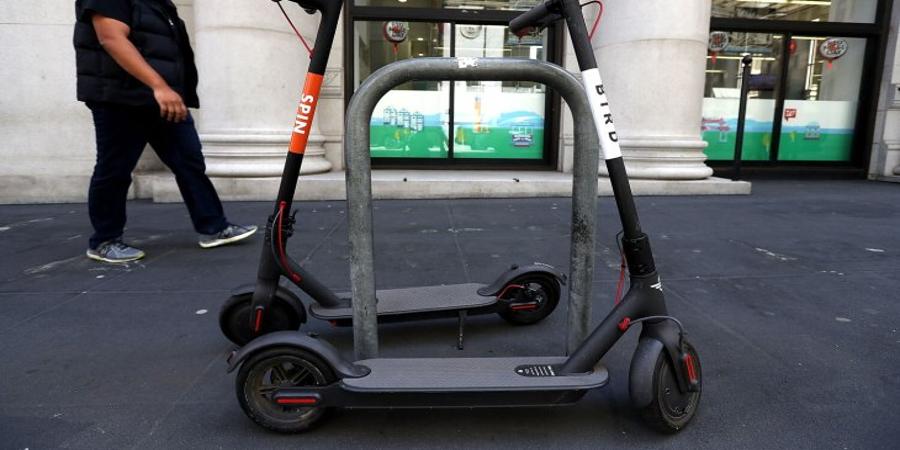
The reduction in headcount comes two weeks after Bird acquired Spin, another shared e-scooter operator based in the U.S. At the time, Bird said the geographic overlap between the two companies was “minimal.” Spin operates in more than 50 cities and university campuses across the country.
“…with any acquisition and integration process, there are redundancies in roles and scope that the business isn’t able to maintain while meeting its goals,” wrote Washinushi. “Regrettably, today we need to reduce our headcount in order to achieve our broader goals and to ensure that the entire organization can sustain itself and continue its mission…”
Washinushi continued to say that Bird needs “to create the most efficient integrated team possible,” which involves cutting certain members of staff. Impacted employees received a calendar invite for a meeting with a senior leader in their department on the day Washinushi sent the email. The email details next steps, including opportunities for teams to discuss the events and an all-hands town hall meeting to talk about the layoffs and learn more about how the Spin integration will play out.
Bird has struggled to reach profitability since going public via a special purpose acquisition merger in November 2021. At the time, Bird’s implied valuation was $2.3 billion, but the company’s stock price began plummeting soon after its debut. And as Bird’s balance sheets became part of the public sphere — detailing rampant cash burn without the revenue to back it up — investors continued to lose confidence.
Bird isn’t uniquely bad at succeeding in the scooter business. Despite the hype that inflated the company’s valuation, deploying shared vehicles is actually tough to get right due to the business’s high-cost, low-return nature. However, Bird didn’t do itself any favors by following a growth-at-all-costs spending model. The company also moved to an asset-light business model that relies on a fleet manager program run by independent contractors to deploy scooters. This has led to less control over the placement of vehicles, which can affect revenue. Bird also delayed rolling out scooters with swappable batteries, which likely added to its cost of operations and decreased asset utilization.
The company’s missteps caught up with it in the summer of 2022, when Bird had to lay off 23% of staff and shut down its retail scooter product in an effort to rein in costs and work toward profits.
In September of the same year, Shane Torchiana took over as CEO, replacing Bird’s founder Travis VanderZanden. Torchiana, who subsequently left the company in August 2023, implemented a strategy of severe cost cuts, which included leaving dozens of unprofitable markets across the U.S., as well as Sweden, Norway and Germany. His strategy also involved increasing fleet utilization by incentivizing fleet managers to rebalance more efficiently, rather than just putting scooters where the managers thought they’d get more rides. Bird’s second-quarter earnings 2023 show that that strategy didn’t really pan out. Average rides per vehicle per day were down 19% year-over-year.
In November 2022, Bird issued a going concern warning, claiming it might not have enough funds to continue operations. That warning has remained in effect until present day.
In the end, Bird was delisted after failing to maintain a market capitalization above $15 million for 30 consecutive days.
Source @TechCrunch