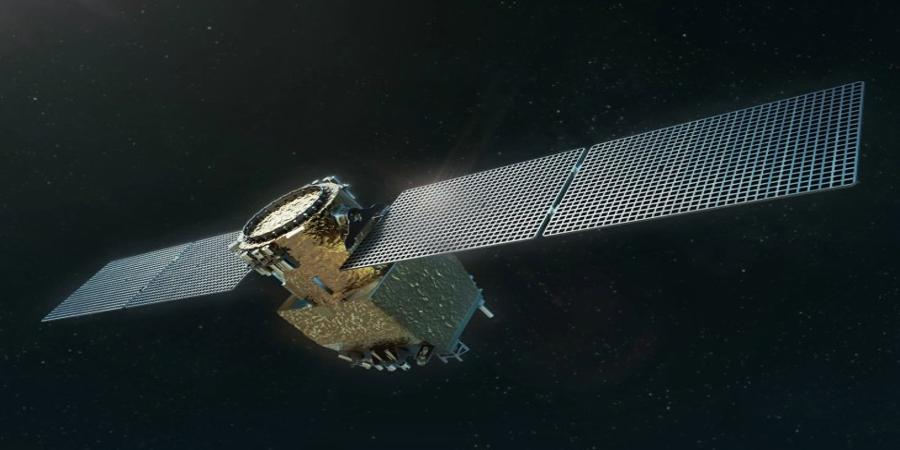
Orbital operations company Astroscale has revealed new details about its approach to refueling satellites in space, as part of a $25.5 million project exploring the concept with the Space Force. Their solution is a bit like a AAA truck traveling at 25,000 MPH.
The concept of on-orbit servicing and repair is attractive to anyone who doesn’t want to see a $100 million investment literally burn up. Many satellites are perfectly functional after years in space, but simply lack the fuel to keep safely to their assigned altitude and trajectory, and must be allowed to deorbit instead.
You could put up another $100 million satellite — or perhaps, as companies like Astroscale and OrbitFab have proposed, you could spend a tenth of that to do a gas run from the surface to geosynchronous orbit.
Of course, most satellites aren’t designed to be refueled, but that could easily change — even if how to about doing it is an open question. Astroscale won a Space Force contract last Summer to explore the possibility in orbit, and the company just published how it plans to do so.
The Astroscale Prototype Servicer for Refueling, or APS-R, is a smallish (funnily enough, “the size of a gas pump”) satellite that will ascend to GEO — around 300 kilometers up — and then descend on a “prepared client” with the correct refueling port. (This client is still an “e.g.” in the diagram, so there’s no official plan yet.)
After refueling it, the APS-R will back off and perform an inspection of the client satellite, looking for any fuel leaks or other issues its operators might want to check. Then it ascends to GEO+ again and rendezvouses with a Defense Innovation Unit RAPIDS fuel depot, which is exactly what it sounds like: an orbital gas station.
Some other concepts of space-based refueling opt for the relative simplicity of keeping all the fuel on the craft itself rather than acting as an emergency shuttle between the station and the customer (hence the AAA comparison). But as the military seems to think that a giant, geostationary pressure vessel full of hydrazine is the safer option, Astroscale is going with that. For all we know there may be a self-contained version for non-military use down the line.
This joint project — basically split down the middle cost-wise — is still only in the “concept of operations” phase, but Astroscale expects to deliver it by 2026. No doubt we’ll hear more about this and other space sustainability projects well before then.
Source @TechCrunch