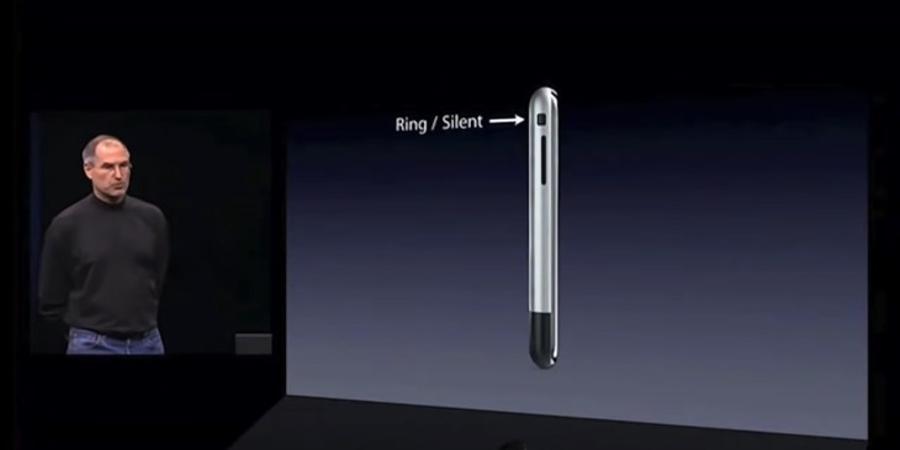
The ring/silent switch has been on the iPhone since the very first one was announced in 2007 by Steve Jobs, but now the writing is on the wall for the device’s last significant moving part. With its replacement by a haptic “action button,” it’s just a matter of time before the rest of the lineup is as smooth as a pebble from the river.
At today’s iPhone event, the no doubt long-contemplated change was announced with little fanfare, selling the new button as a customizable shortcut to anything the user wants. Launch the camera, or an assistance feature, or a particular app, etc.
Seems useful in some ways, especially for accessibility. But I mourn the loss of this switch the way I do every time they compromise the hardware design of Apple devices.
Removing TouchID is one such choice I still hold out hope they will reverse. The haptic touchpads in MacBooks is not something I enjoy compared to the actual depression of the originals, though it’s probably a net benefit repair-wise. The attempt to unify under a single port was unsuccessful in everything but driving dongle sales. They have tried and failed to kill the magnetic power connector.
Catch up on all of our Apple Event 2023 coverage here.
The removal of the ring/silent switch is logical in that, naturally, the way these devices are used has changed over the last 15 years. In 2007, the iPhone was a phone first and everything else second, because that’s what smartphones were at the time. The ring/silent switch was not an innovation but a necessity: If you were going to use this thing as your main phone, you needed to be able to put it on silent or vibrate quickly and easily so you didn’t blow up a meeting or theater.
Over time that necessity has lessened as we gradually stopped paying attention to ringtones and distinct notification sounds because audio cues are superfluous if you’re looking at your phone’s lockscreen every 30 seconds anyway. How many of us toggled the switch to “silent” when we took it out of the box and never touched it again? After all, the OS is smart enough to understand when you want to hear the sound of a video or song even if it’s technically in silent mode.
But the assurance of that unmoving switch was the draw. I didn’t have to remember whether I had put my phone in silent or not. There was a physical switch on the thing that guaranteed that unless I was playing a piece of media, it would not make a peep, forever. That assurance is gone now, though of course it will probably be just as easy to set it to silent and forget about it.
And I have always liked physical interfaces with mechanical certainty. You knew when you pressed the original home button because it actually went down! And you knew when you had successfully put your phone on silent or loud because you could feel the switch go from front to back. No mistakes possible . . . unless you brushed it on something and accidentally put the sound back on, which in all honesty I have done multiple times.
I want to be sad and mad about the loss of this, being as it is the last real moving part in the iPhone — the other buttons do technically depress but only trivially, and I suspect they won’t at all starting next year, once they work out the kinks in this test run. But to be honest I’m finding it hard, because unlike the loss of TouchID, this is a situation where a door is closing but a window is opening.
The new action button is still a physical interface, after all: an actual button and not yet another onscreen interface. I already know what I’m going to set it to, and after a month or two I will probably find it hard to go back when I, on occasion, boot up the old SE to feel its reassuring edges.
That is, I know what I’ll do with it once they come out with an iPhone that doesn’t have that ugly gap in the display. You’ll never break me, Apple. I’m not buying your “Dynamic Island” malarkey. Fix the hole!
Source @TechCrunch