After a raucous year of supposed breakthroughs in superconducting physics, 2023 is looking like it’s going to end with a whimper.
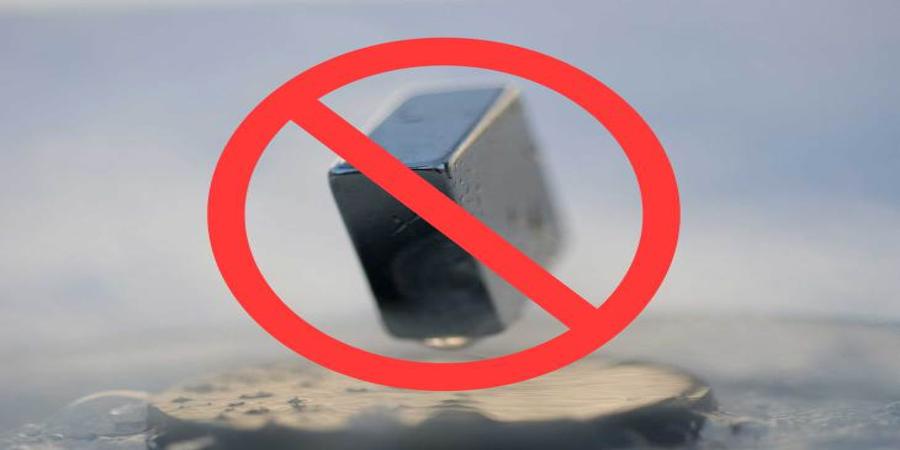
This summer, LK-99 was the room-temperature superconductor du jour. Its downfall was as swift as its rise; myriad experiments revealed that it was little more than a run-of-the-mill refrigerator magnet.
You could say that people were primed for LK-99 by another discovery earlier this year. Unlike LK-99, this material was accompanied by a peer-reviewed journal article in Nature. That’s not a guarantee of verity, but for many people, it’s pretty close.
The new material appeared to conduct electricity without resistance at a very comfortable 69.8°F. The catch was that it had to be squeezed between two diamonds exerting a pressure of 145,000 psi. While that sounds like a lot, it was 100 times less than other room-temperature superconductors.
The problem suddenly seemed a lot more tractable. Maybe this material wasn’t quite ready for commercialization, but perhaps future refinements might bring the pressure requirement down to more manageable levels. The arrow of progress was pointing in the right direction.
Soon after the paper was published in March, though, doubts began to mount.
The paper’s lead author, Ranga Dias, already had one paper retracted at the time. A TechCrunch+ investigation later that month revealed that Dias had falsely claimed the company he founded was backed by big-name investors, including Sam Altman, Daniel Ek and Bill Gates’s Breakthrough Energy Ventures.
Then in August, another of Dias’s papers was retracted, and in September, eight of the 11 authors on the March paper asked for Nature to retract the most recent one.
Now that paper has been retracted, too, over concerns “regarding the reliability” of data in it. “An investigation by the journal and post-publication review have concluded that these concerns are credible, substantial and remain unresolved,” the retraction notice reads.
At first, the material described in the Nature paper published in March was cautiously heralded as a breakthrough. Scientists were hopeful, but also circumspect. Dias’s name was already enmeshed in controversy. Once experts began to dig into the details, they found graphs and charts that didn’t jibe with the data or the methods listed in the paper.
Retractions are part and parcel to the scientific process, but they’re also something of a black mark on the researcher’s curriculum vitae. Science depends on peers picking apart other scientists’ claims.
Usually that happens quietly at the peer-review stage, before it becomes a more official part of the scientific record. But occasionally, problems slip through the process undetected. Sometimes they’re oversights that can be quickly corrected and disclosed. Other times, the concerns are more vexing.
In their letter to Nature requesting a retraction, Dias’s co-authors claimed that he “has not acted in good faith in regard to the preparation and submission of the manuscript.” The group also listed their concerns.
Now with the retraction a reality, the odds of researchers discovering a room-temperature superconductor are looking even longer. Never say never, but probably best not to get our hopes up next year.
Source @TechCrunch