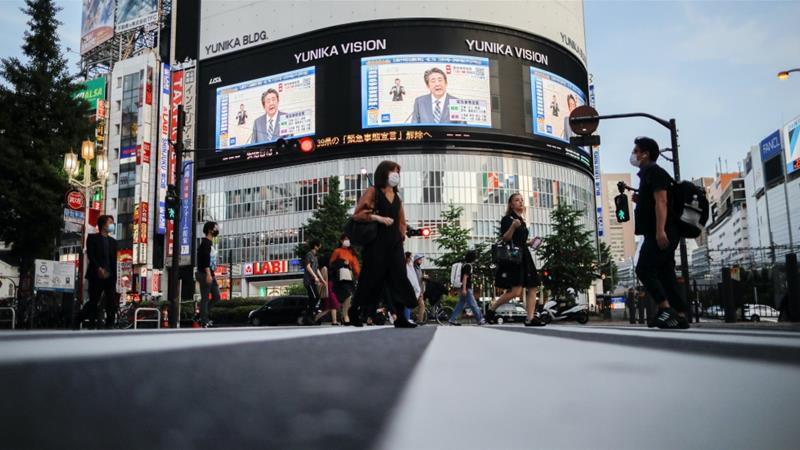
Analysts expect a record 21.5% GDP contraction this quarter
The last time Japan suffered recession was in the second half of 2015.
Japan’s economy slipped into recession for the first time in 4-1/2 years, GDP data showed on Monday, putting the nation on course for its deepest postwar slump as the coronavirus crisis takes a heavy toll on businesses and consumers.
The world’s third-largest economy shrank for the second consecutive quarter in the three months to March, intensifying the challenge for policymakers battling a once-in-a-century pandemic that has already caused widespread disruptions.
Gross domestic product (GDP) contracted an annualised 3.4% in the first quarter as private consumption, capital expenditure and exports fell, preliminary official data showed, following a revised 7.3 decline in the October-December period, meeting the technical definition of a recession.
The last time Japan suffered recession was in the second half of 2015.
“It’s near certainty the economy suffered an even deeper decline in the current quarter,” said Yuichi Kodama, chief economist at Meiji Yasuda Research Institute. “Japan has entered a full-blow recession.”
The coronavirus, which first emerged in China late last year, has ravaged the global economy as many nations went into strict lockdowns to curb the outbreak that has so far killed over 3,10,000 people worldwide. The pandemic has been massively disruptive on supply chains and businesses, particularly in trade-reliant nations such as Japan.
Private consumption, which accounts for more than half of Japan’s $5 trillion economy, slipped 0.7%, versus a 1.6% drop expected by economists.
That marked the second straight quarter of decline, as households were hit by the double-whammy of the coronavirus and a sales tax hike to 10% from 8% in October last year.
The virus’ impact on corporate Japan has been telling, with the GDP data showing exports contracted sharply by 6% in the first quarter.
The shakout in global trade was highlighted in the recent March data, with Japan’s exports slumping the most in nearly four years due to plunging U.S.-bound shipments including cars.
Capital expenditure fell 0.5% in the fourth quarter, against a median forecast for a 1.5% drop and marked the second consecutive quarter of declines, the data showed.
Taken together, domestic demand knocked 0.7 percentage point off GDP growth, while external demand shed 0.2 point.
All of this has put a strain on labour market. The jobless rate in March rose to its highest in a year, while job availability slipped to a more than three-year low.
Deepening slump
Conditions are expected to have worsened in Japan in the current quarter after Prime Minister Shinzo Abe in April declared a nationwide state of emergency amid a rise in coronavirus infections.
The emergency, which urged citizens to stay home and many businesses to close, was lifted for most regions on Thursday, but remained in effect for some big cities including Tokyo.
Analysts polled by Reuters expect Japan’s economy to shrink an annualised 22.0% in the current quarter, which would be the biggest decline on record and underscores the collapse in activity that is expected to see the worst global slump since the Great Depression of the 1930s.
The government has already announced a record $1.1 trillion stimulus package, and the Bank of Japan expanded stimulus for the second straight month in April. Abe has pledged a second supplementary budget later this month to fund fresh spending measures to cushion the economic blow from the outbreak.
The nation’s major globe-trotting manufacturers weren’t spared the pandemic’s sweeping impact either.
Toyota Motor Corp on Friday said it would reduce vehicle production in Japan by 122,000 units in June, as a lack of demand for new cars due to the coronavirus prompts the automaker to keep its plants running on limited operations. The automaker is bracing for an 80% drop in full-year operating profit, its lowest in nine years.