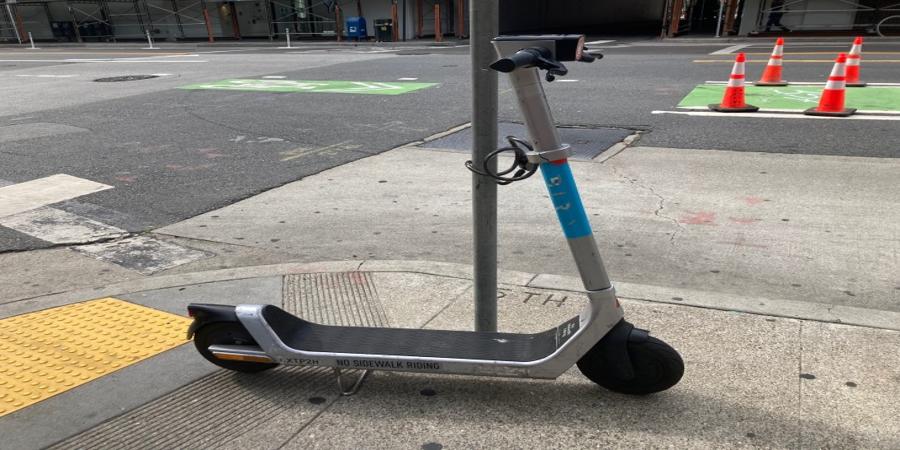
Shared micromobility company Bird is exiting several markets across the world as it struggles to build an economically viable business, according to a regulatory filing.
Bird said it will “fully exit Germany, Sweden and Norway, as well as wind down operations in “several dozen additional, primarily small to mid-sized markets” across the U.S., Europe, the Middle East and Africa, according to the company. Bird would not respond to requests for more information from TechCrunch, so it’s not clear which cities Bird will exit. However, the only Middle Eastern market Bird is in is Israel, and Bird doesn’t appear to be in any African countries.
The downsizing of the business comes a few months after Bird laid off 23% of its staff in an attempt to become more financially self-sustainable and achieve profitability. More importantly, Bird really needs to raise its share price before it gets delisted by the New York Stock Exchange. In June, Bird got a warning from the NYSE for trading too low. The company was given six months to get back to compliance, which means holding an average share price of at least $1 across 30 consecutive trading days and having a share value above $1 on the final trading day of that month. At the time, Bird was trading at $0.56. Today, Bird is trading at $0.37 after hours, which, to be fair, is up 1.01%.
In a blog post, Bird blamed a lot of the bumps on the road to profitability to cities that lack a “robust regulatory framework.” The company said it reviewed its portfolio of cities to weed out the ones without such a framework — the cities that have too much competition, an oversupply of vehicles and overcrowded streets.
It’s not clear what this will mean for Bird’s army of fleet managers who will be affected by the change, and Bird did not respond in time to TechCrunch’s request for comment.
Bird’s fleet managers are essentially contractors that pay up-front fees to manage fleets of scooters for Bird. They essentially pay to rent the scooters from Bird so they can deploy them and earn an income, but they are responsible for maintenance, storage and maintaining adequate insurance coverage. The program has been criticized for potentially luring inexperienced contract workers into debt for scooters they’ll never own.
Source @TechCrunch