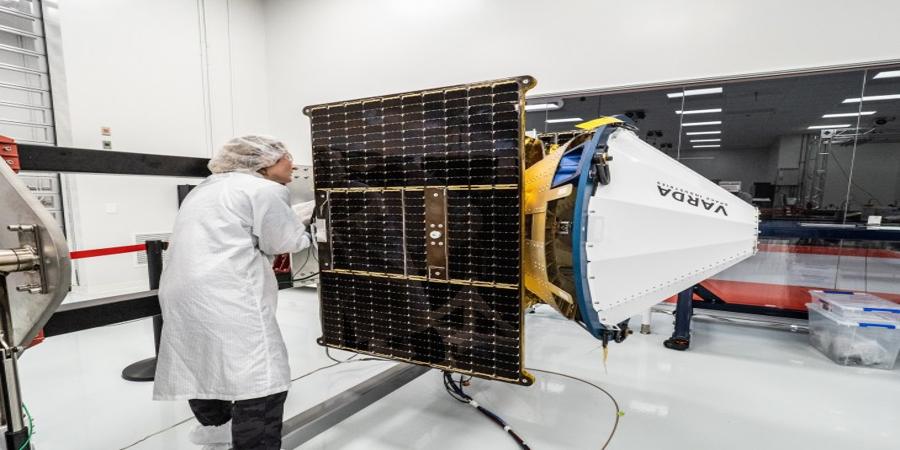
In-space manufacturing startup Varda Space Industries will land its next spacecraft in Australia as it continues working with U.S. regulators to get its first mission approved for reentry in Utah, the company announced Thursday.
The U.S. Air Force and the U.S. Federal Aviation Administration last month rejected Varda’s application to land its first in-space manufacturing spacecraft in the Utah desert. Varda cofounder Delian Asparouhov told TechCrunch in a recent interview that the issue is primarily due to the three parties coordinating under a reentry framework called Part 450.
“It had nothing to do with the safety of our vehicle, our design, our analyses, but ultimately coordination between the three parties,” he said. He added that the company met in-person with UTTR (Utah Test and Training Range) last week to begin the process of coordinating a new set of target dates for bringing the spacecraft home.
“We feel confident that we technically match all the regulatory requirements for Part 450 and it’s a question of just coordination on the particular objective window for reentry.”
As the company continues working with American regulators, it formed a new agreement with Australian company Southern Launch that would see Varda’s next capsule landing at the Koonibba Test Range in 2024.
Asparouhov clarified that the company is not moving to Australia for its next mission due to regulatory compliance issues here in the United States – indeed, the company will still need an FAA reentry license, even if the capsule is not reentering on American soil – but “different ranges have different availabilities and resources and have different capabilities.”
Understanding range availability is especially important for something like spacecraft reentry. While a rocket launch can be delayed by a day or week with little problem for the vehicle, once the satellite bus executes its reentry burn, it’s coming back, whether regulators approve or not.
Eventually, Asparouhov said he anticipates Varda having at a minimum of three to four ranges online and that UTTR explicitly requested early on that the startup begin coordinating with other ranges. Partnering with multiple ranges was always in the company’s pipeline because it aims to eventually hit a reentry cadence of once per month by 2026, Asparouhov said.
Regulatory burden has been top of mind throughout the space industry this week, particularly as three major space companies testified before Congress unanimously requesting more resources be allocated to the FAA to deal with the huge increase in space launch activity. Companies also told lawmakers that regulation needed to be more streamlined to ensure American competitiveness on the global stage.
Speaking generally about space regulation, Asparouhov echoed these comments:
“I think you could argue that in 2013, 2014, things were actually relatively streamlined. But over the past nine years, there’s been an exponential growth in activity […] so I don’t think that there necessarily need to be policy changes, its just a question of staffing and responsiveness,” he said. “We definitely get the sense that AST [the FAA’s Office of Commercial Space Transportation] is definitely stretched thin with the amount of activity going on today. When I think about streamlining, I don’t think this is necessarily some sort of change of the bar of safety or regulation or anything like that. It’s just a question of how much staff are available to do the level of in-depth technical analysis that is involved coordinating these types of activities.”
The story has been updated to reflect that Delian Asparouhov is Varda’s cofounder, not CEO.
Source @TechCrunch