Challenger search engine Neeva is no more, in its current guise at least, as the Mountain View, California-based company revealed that it’s winding down its consumer business.
Founders Sridhar Ramaswamy and Vivek Raghunathan wrote in a blog post yesterday that they had faced significant challenges attracting new users which, combined with the difficult economic environment that all companies currently face, means that it is no longer viable to continue on its current course.
“There is no longer a path towards creating a sustainable business in consumer search,” they wrote. “As a result, over the next few weeks, we will be shutting down neeva.com and our consumer search product, and shifting to a new area of focus.”
Founded in 2019 by former Googlers Ramaswamy and Raghunathan, Neeva launched an ad-free, subscription-only (i.e. paid) search engine in the U.S. two years ago, before adding a free tier to the mix six months later. In the months that followed, Neeva said it amassed more than 600,000 users, though the vast majority of those were on a free plan. In search of growth, Neeva went on a rapid global expansion exercise starting with Europe back in October, and then set about trying to reinvent the entire search experience with a new generative AI engine that combined multiple results and sources to create a single answer.
Death to the “10 blue links,” was the general idea.
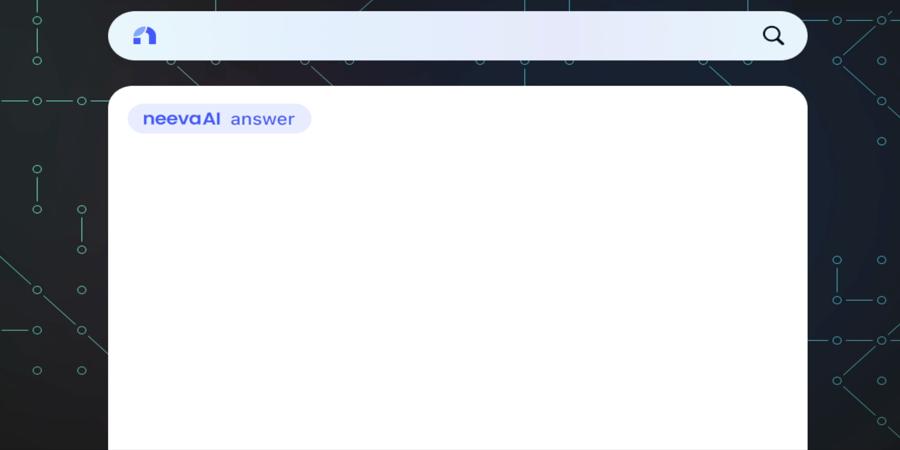
NeevaAI in action Image Credits: TechCrunch
NeevaAI in action Image Credits: TechCrunch
Neeva had also been working on a standalone generative AI search app called Gist, and while it had been made available on Android already, its planned iOS launch at the end of March was continuously delayed with little in the way of an explanation.
The number of layoffs in the tech sphere over the past year is a clear indicator of the tough economic headwinds even the largest of companies are facing, something that Neeva won’t have been impervious to. The company had raised north of $75 million since its inception, including from big-name backers such as Sequoia and Greylock, but more than two years on since its Series B raise Neeva should probably have been thinking about a Series C round — something that, in the end, clearly wasn’t forthcoming.
While Neeva’s promise of a genuine alternative to Google was based largely around an ad-free experience and its own search stack, the bottom line is that it was always going to be a herculean undertaking to knock Google off its lofty perch. This is something that its deep-pocketed rival Microsoft has been trying to do of late by injecting a little bit of OpenAI’s ChatGPT into its Bing search engine, prompting Google to accelerate its own efforts in the space with Bard.
So this was evidently a David vs. Goliath & Goliath affair, though Neeva did have some backup from other challengers such as You.com and Brave. What’s clear from all this is that Neeva just hadn’t seen the growth it, or its investors, had hoped for. However, the two founders are adamant that convincing users to pay for an ad-free search wasn’t the difficult part — the main challenge was actually getting them to switch from the big-name incumbents (mostly Google).
“Contrary to popular belief, convincing users to pay for a better experience was actually a less difficult problem compared to getting them to try a new search engine in the first place,” the founders wrote. “Throughout this journey, we’ve discovered that it is one thing to build a search engine, and an entirely different thing to convince regular users of the need to switch to a better choice. From the unnecessary friction required to change default search settings, to the challenges in helping people understand the difference between a search engine and a browser, acquiring users has been really hard.”
As part of the consumer business shutdown, Neeva said it will issue refunds to those with paid subscriptions, and it will delete all user data. But this doesn’t necessarily spell the end for Neeva. The company had previously alluded to some future monetization plans beyond paid subscriptions, including licensing deals to power application search inside enterprises — and this could be a route it pursues with more haste, now that it’s winding down the main part of its business.
Earlier this week, reports emerged that Neeva was in discussions with cloud giant Snowflake about a possible acquisition, and in light of the news that Neeva is transitioning away from consumer, such a deal makes a great deal of sense. Essentially, taking the work it has already done with large language models (LLMs) and search, and putting it to use in very specific use-cases — particularly inside an enterprise that doesn’t want to rely on tech provided by the likes of Google or Microsoft, or doesn’t want to start their own internal development from scratch.
But Neeva hasn’t yet confirmed any specific plans for what is next, whether it’s as part of a larger enterprise or licensing its tech out for others to use.
“Over the past year, we’ve seen the clear, pressing need to use LLMs effectively, inexpensively, safely, and responsibly,” the founders concluded. “Many of the techniques we have pioneered with small models, size reduction, latency reduction, and inexpensive deployment are the elements that enterprises really want, and need, today. We are actively exploring how we can apply our search and LLM expertise in these settings, and we will provide updates on the future of our work and our team in the next few weeks.”
Source @TechCrunch